
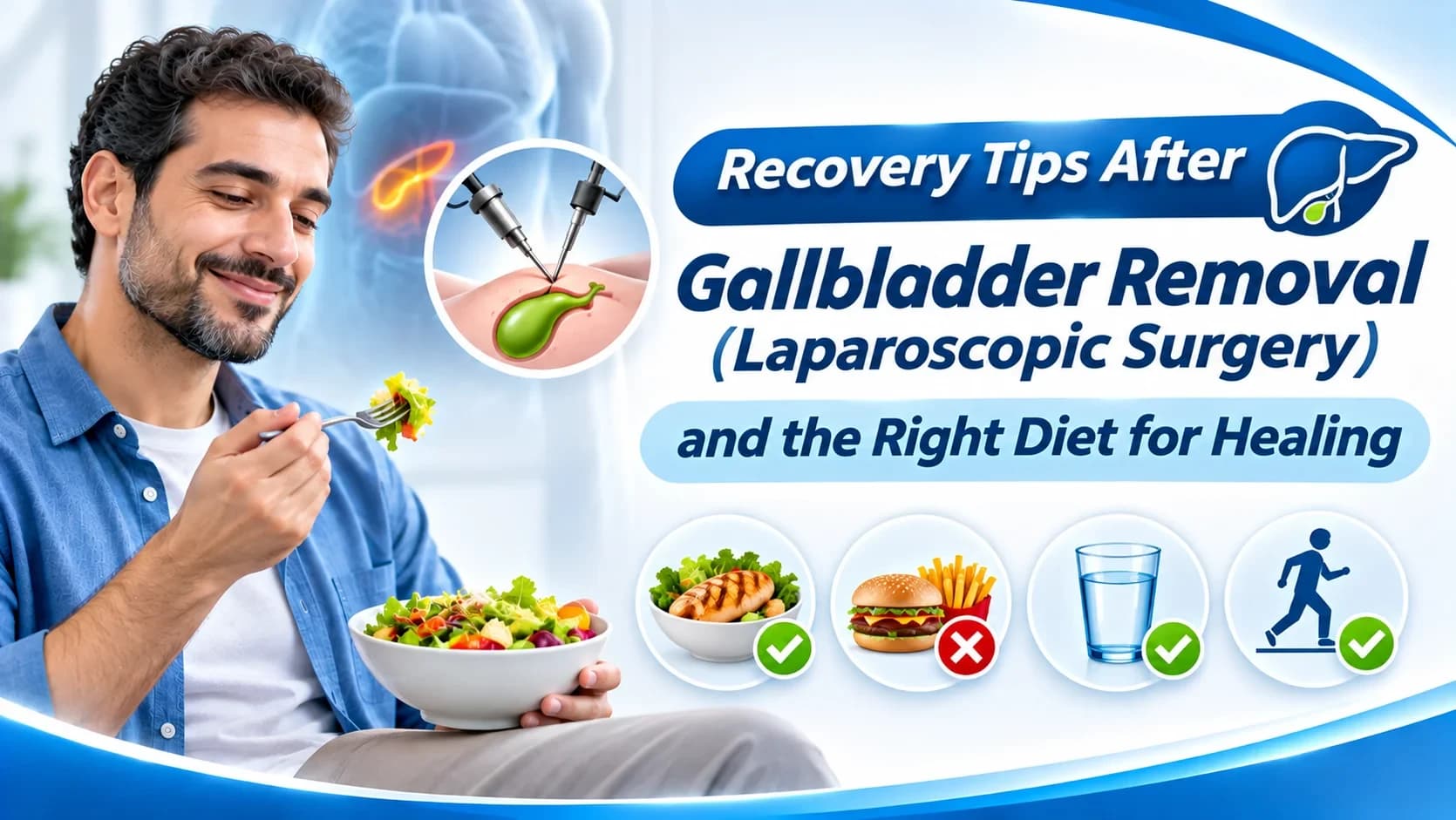

After undergoing laparoscopic gallbladder removal, the body begins a new phase during which it needs some time to recover and adapt to the changes in the digestive process. Although most patients can return home on the same day or the day after surgery, following medical instructions remains essential to prevent complications and gradually resume daily activities. In this article, we explore the most important tips after laparoscopic gallbladder removal, covering nutrition, wound care, showering, physical activity, and sexual activity, as well as the symptoms that require medical attention.
Medical Review Disclaimer: This article has been medically reviewed and approved by Dr. Ahmed Abu Kheima, Consultant of General Surgery, Gastrointestinal Surgery, and Laparoscopic Surgery.
Essential Tips After Laparoscopic Gallbladder Removal
Taking proper care of your body after surgery helps reduce discomfort and support recovery. Some of the most important recommendations to follow include:
Take the medications and painkillers prescribed by your doctor without changing the doses on your own.
Start walking gradually at a gentle pace to reduce inactivity and improve blood circulation.
Avoid lifting heavy objects and performing strenuous exercises until your doctor gives you permission.
Keep the incision sites clean and monitor them for any unusual changes.
Eat small, balanced meals during the first few days if large meals cause discomfort.
Drink adequate amounts of water and avoid physical strain.
Recovery time varies from one person to another depending on overall health and the nature of the surgery. Therefore, your surgeon's instructions remain the primary reference.
Diet After Laparoscopic Gallbladder Surgery
After gallbladder removal, the liver continues to produce bile, but it flows directly into the intestines instead of being stored in the gallbladder. The digestive system may need some time to adapt to this change, which is why paying attention to nutrition during the first few days is recommended.
Recommended Foods After Surgery
You can start with light, balanced meals and gradually return to your usual diet according to your tolerance. Suitable options include:
Rice, boiled potatoes, and oatmeal.
Lean chicken and fish.
Cooked vegetables and fresh fruits.
Soups and easily digestible foods.
It is preferable to divide your food intake into smaller meals rather than eating large portions. You should also initially reduce fried foods and high-fat meals, especially if they cause diarrhea or bloating. Not all patients need to follow a low-fat diet permanently; instead, dietary choices can be gradually expanded according to how the body responds.
Are There Any Fruits to Avoid After Gallbladder Removal?
There is no fixed list of fruits that all patients must avoid after gallbladder removal. Fruits can be consumed in moderation while monitoring their effects on the digestive system. If certain types cause bloating or diarrhea, you can reduce the amount or postpone eating them and try again later.
Symptoms After Laparoscopic Gallbladder Removal: What Is Normal?
Some temporary symptoms are common after surgery and do not necessarily indicate a problem. The most notable include:
Mild pain around the surgical incisions.
Abdominal bloating or a feeling of gas.
Shoulder pain caused by the gas used during laparoscopy.
Mild nausea or fatigue during the first few days.
Temporary changes in bowel movements, such as loose stools or diarrhea.
These symptoms usually improve gradually. However, if they persist or become more severe, you should contact your doctor. It is important to distinguish between expected discomfort during recovery and symptoms that may indicate complications requiring medical evaluation.
Physical Activity, Showering, and Returning to Daily Life
When Can You Shower After Gallbladder Surgery?
Many patients can shower 24 to 48 hours after surgery, but the timing depends on the type of dressing, how the incisions were closed, and the surgeon's instructions. Avoid rubbing the incision sites and gently pat them dry after showering. Do not remove medical strips or surgical glue on your own. You should also postpone swimming and soaking in bathtubs until the wounds have healed and your doctor gives you permission.
When Can You Return to Work and Exercise?
Gentle walking helps improve blood circulation and can usually be started early, depending on your physical ability. However, heavy lifting and strenuous exercise should be postponed until your doctor gives you permission, especially if these activities cause pain or pulling around the incision sites.
Some patients may be able to return to office-based work within one or two weeks, while jobs that require physical effort may require more time. You should also avoid driving until you can control the vehicle and perform an emergency stop safely. Do not drive while taking painkillers that affect your concentration.
When Can You Resume Sexual Activity After Gallbladder Surgery?
There is no single recovery period that applies to everyone when it comes to resuming sexual activity after laparoscopic gallbladder removal. You can usually resume sexual activity when you feel comfortable moving without pain or pulling around the incisions, and after consulting your doctor when necessary. If sexual activity causes pain or pressure on the abdomen, it is best to postpone it until recovery progresses.
Can You Pray After Gallbladder Surgery?
Patients can return to prayer according to their physical ability, while avoiding movements that cause pain or put pressure on the surgical sites. You may need to pray while sitting temporarily if bowing and prostrating are uncomfortable. For religious rulings regarding how patients should perform prayers, you can consult a trusted religious authority.
Does Weight Gain Occur After Gallbladder Removal?
Gallbladder removal does not directly or inevitably cause weight gain. However, weight may change after surgery due to changes in appetite, eating habits, or physical activity levels. Some patients may also consume more calories once the symptoms that previously prevented them from eating improve.
To maintain a healthy weight, it is recommended to follow a balanced diet, gradually resume physical activity, and pay attention to portion sizes and food quality without following restrictive diets during recovery.
When Should You See a Doctor After Gallbladder Removal?
Although many patients recover without complications, certain warning signs require urgent contact with a doctor, including:
Fever or chills.
Severe or worsening abdominal pain that does not improve with prescribed medication.
Yellowing of the skin or whites of the eyes.
Persistent vomiting or inability to drink fluids.
Increasing redness, swelling, or pus around the surgical wounds.
Difficulty breathing or chest pain.
Difficulty breathing and chest pain require emergency medical evaluation. You should not wait for your routine follow-up appointment if either of these symptoms occurs.
Book Your Consultation to Monitor Recovery After Gallbladder Removal
Following post-surgical instructions and attending medical follow-up appointments help detect potential problems early and determine when it is appropriate to return to your normal routine. If you have undergone laparoscopic gallbladder removal or are preparing for surgery, you can contact Dr. Ahmed Abu Kheima's clinic in Smouha, Alexandria, for a medical assessment and guidance tailored to your condition.
Frequently Asked Questions
How Long Does Recovery Take After Laparoscopic Gallbladder Removal?
Many patients can return to most daily activities within one or two weeks. However, regaining full activity may take several weeks, depending on the nature of their work, overall health, and the complexity of the surgery.
Is Diarrhea Normal After Gallbladder Removal?
Some patients may experience loose stools or diarrhea after surgery due to changes in how bile reaches the intestines. If diarrhea persists or becomes severe, you should consult your doctor for an assessment.
When Can I Sleep on My Side After Surgery?
You can sleep on your side when doing so does not cause pain or put pressure on the incision sites. Sleeping on your back may be more comfortable during the first few days, after which you can gradually change your sleeping position according to your comfort.
Can I Eat Normally After Gallbladder Removal?
Yes. Most patients can return to a normal, balanced diet after recovery, and not everyone needs to avoid fats permanently. However, it is preferable to initially reduce fatty foods if they cause digestive problems.
Do Recovery Experiences After Laparoscopic Gallbladder Surgery Differ From One Person to Another?
Yes. Recovery experiences vary depending on overall health, the reason for surgery, and how the body responds to the recovery process. Some patients experience rapid improvement, while others need more time to adapt to digestive changes and recover from the effects of surgery.