
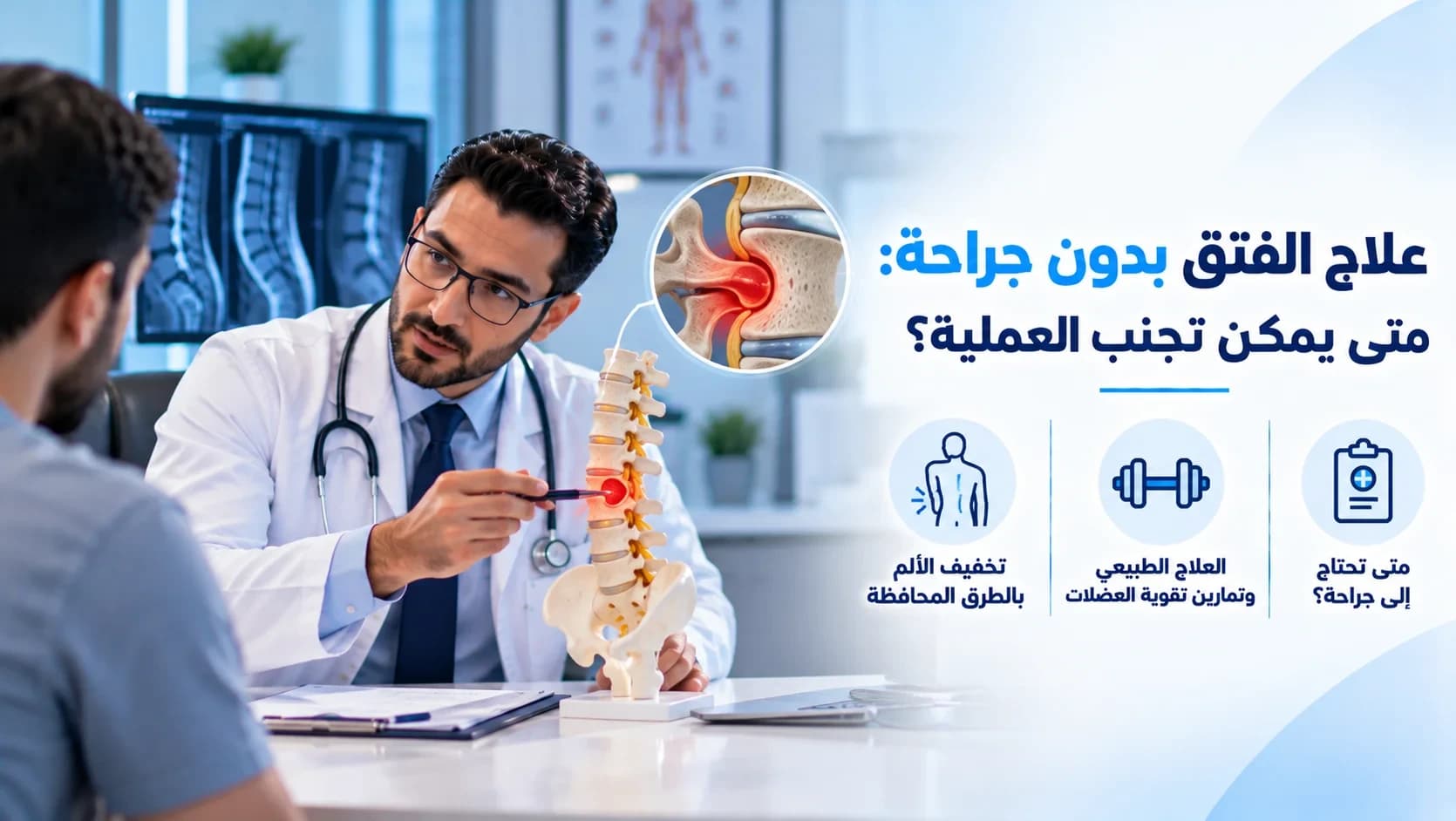
Many people look for hernia treatment without surgery to avoid an operation and the recovery period, especially when a bulge appears in the abdomen or groin and is accompanied by a feeling of heaviness or pain. However, whether monitoring without surgery is an option depends on the type of hernia, its size, associated symptoms, and the patient's overall health. It is therefore important to understand the difference between relieving symptoms and treating a hernia definitively.
In this article, we explore the cases in which medical monitoring may be an option without immediate intervention, measures that can help reduce discomfort, warning signs that require medical attention, and guidance based on reliable medical information.
Medical Disclaimer: This article must be reviewed and approved by Dr. Ahmed Abu Khazima before publication. Medical review has not yet been confirmed.
Can a Hernia Be Treated Without Surgery Permanently?
The answer depends on the type of hernia, the patient's age, and the severity of symptoms. In most cases of hernia in adults, the weakness in the abdominal wall does not heal on its own, and no medications or home remedies can close the opening through which tissues protrude. Therefore, surgery remains the primary method for repairing a hernia permanently.
However, not every case requires surgery immediately after diagnosis. A doctor may recommend monitoring for some patients with a small inguinal hernia that causes no symptoms or only mild discomfort, depending on an assessment of the risks. This approach is known as watchful waiting.
It is important not to decide to postpone surgery solely because the bulge temporarily disappears or the pain decreases. The type of hernia must be identified, and the likelihood of complications must be assessed by a specialist.
When Can Hernia Surgery Be Postponed?
Medical monitoring may be an appropriate option for some adults with an inguinal hernia that does not cause symptoms that significantly affect their daily lives. In these cases, the doctor evaluates the size of the hernia, whether the bulge can easily return to the abdomen, any changes that have occurred, and the patient's overall health.
However, this approach is not suitable for every type of hernia or every patient. A painful hernia, one that is increasing in size, or one that interferes with movement and daily activities may require surgical repair. Femoral hernias also carry a higher risk of incarceration and strangulation, so postponing surgery should not be assumed to be safe.
If the doctor recommends monitoring, it is essential to attend follow-up appointments and understand the warning signs. The treatment plan may change if new pain develops, the bulge increases in size, or symptoms become more uncomfortable.
What Are the Ways to Relieve Hernia Symptoms Without Surgery?
Certain daily measures may help reduce pressure on the abdominal wall and relieve discomfort, but they do not repair the opening itself or prevent all complications. These measures should preferably be selected in consultation with a doctor, especially if the hernia is painful or changes in size.
Depending on the condition, the following measures may help:
Treating constipation: Eating fiber-rich foods and drinking adequate fluids can help reduce straining during bowel movements.
Avoiding heavy lifting: Especially if lifting causes pain or increases the bulge. Ask your doctor which activities are safe for your condition.
Adjusting physical activity: Avoid movements that worsen symptoms without stopping all physical activity unless your doctor recommends doing so.
Managing weight when necessary: Reaching a healthy weight may help reduce abdominal pressure and improve surgical readiness if an operation becomes necessary.
Do not apply excessive pressure to push the hernia back into place or use unverified home remedies. A hernia belt is not a permanent treatment and should not be used without medical guidance.
Does Treatment Differ for Inguinal, Umbilical, and Hiatal Hernias?
The approach to hernia management varies according to its location and nature, so there is no single treatment plan suitable for every case. An inguinal hernia usually appears where the lower abdomen meets the groin, while an umbilical hernia develops around the navel. An incisional hernia may also occur at the site of a previous surgical incision.
A hiatal hernia, on the other hand, occurs when part of the stomach moves upward through an opening in the diaphragm. It may be associated with heartburn and acid reflux, and its evaluation and treatment differ from those of hernias in the abdominal wall.
In some cases of hiatal hernia associated with reflux, lifestyle modifications and prescribed medications can help control symptoms, but they do not necessarily restore the anatomy to its normal position. More complex cases or those involving complications may require specialist intervention. Therefore, identifying the type of hernia is the first step toward choosing an appropriate treatment.
What Are the Serious Hernia Symptoms That Require Emergency Care?
A hernia can become a medical emergency if tissue becomes trapped in the opening and cannot return to its normal position, or if its blood supply is cut off. The loss of blood supply to trapped tissue is known as strangulation and may lead to tissue damage and life-threatening complications.
Seek emergency medical care immediately if you experience any of the following warning signs:
Sudden or severe pain at the hernia site.
A noticeable increase in the size of the bulge or the development of a painful lump that cannot return to its normal position.
Redness or discoloration of the skin over the hernia.
Nausea, vomiting, or abdominal swelling, especially when accompanied by an inability to pass gas or have a bowel movement.
Fever accompanied by hernia pain or a deterioration in your general condition.
Do not wait for a routine appointment if these signs appear, and do not attempt to manage them with painkillers or by pressing on the bulge. Urgent assessment is necessary to determine whether emergency surgery is required.
When Do You Need Laparoscopic Hernia Repair?
A surgeon may recommend hernia repair if it causes recurrent pain, increases in size, limits daily activities, or belongs to a type associated with a higher risk of complications. The timing of surgery depends on the diagnosis, physical examination, and the patient's health, rather than the size of the bulge alone.
Laparoscopic hernia repair is one of the available surgical options for suitable cases. It is performed through small incisions using a camera and surgical instruments. Depending on the type of hernia and the repair plan, the surgeon may use surgical mesh to reinforce the weakened area. This approach may be associated with faster recovery in some cases, but it is not the most suitable option for every patient.
When discussing surgery with your surgeon, ask about the available options, their benefits and risks, the possibility of hernia recurrence, and the expected recovery period. The decision should be based on an individualized assessment that balances the risks of waiting against those of surgical intervention.
Book Your Consultation With Dr. Ahmed Abu Khazima for a Hernia Evaluation
If you have a bulge in your abdomen or groin, or have been diagnosed with a hernia and want to know whether surgery can be postponed, an examination by a specialist surgeon can help you understand the options suitable for your condition. The safety of monitoring or the need for surgery cannot be determined from symptoms alone or from information published online.
Dr. Ahmed Abu Khazima's center provides gastrointestinal surgery, endoscopic procedures, and laparoscopic hernia repair services in Alexandria. During your consultation, the doctor can assess the type of hernia, symptoms, and medical history, then discuss whether monitoring is appropriate or surgical repair is the better option.
To book an appointment, contact the clinic or visit us in Smouha at 29 Fawzi Moaz Street, Clinic 203. Request a clear medical evaluation to help you make an informed and safe decision.
Frequently Asked Questions About Hernia Treatment Without Surgery
Can a Hernia Disappear on Its Own?
Most hernias in adults do not disappear spontaneously. The bulge may temporarily become less noticeable, but this does not mean the weakened area has healed. Some umbilical hernias in children are an exception, and a doctor can determine whether monitoring or treatment is necessary.
Are There Medications That Can Treat a Hernia Without Surgery?
No medications can close an opening in the abdominal wall. Certain medications may help manage symptoms associated with specific conditions, such as acid reflux accompanying a hiatal hernia, but they are not a definitive treatment for the hernia itself.
Are Walking and Exercise Safe for People With Hernias?
This depends on the type and size of the hernia and the symptoms it causes. Some light activities may be appropriate, while weightlifting or movements that require straining may worsen discomfort. Consult your doctor to determine a safe level of physical activity for your condition.
Can a Hernia Belt Replace Surgery?
No. A hernia belt does not repair the weakness in the abdominal wall or prevent all complications. Do not use one without medical guidance, and do not rely on it instead of a surgical evaluation or the recommended monitoring plan.