
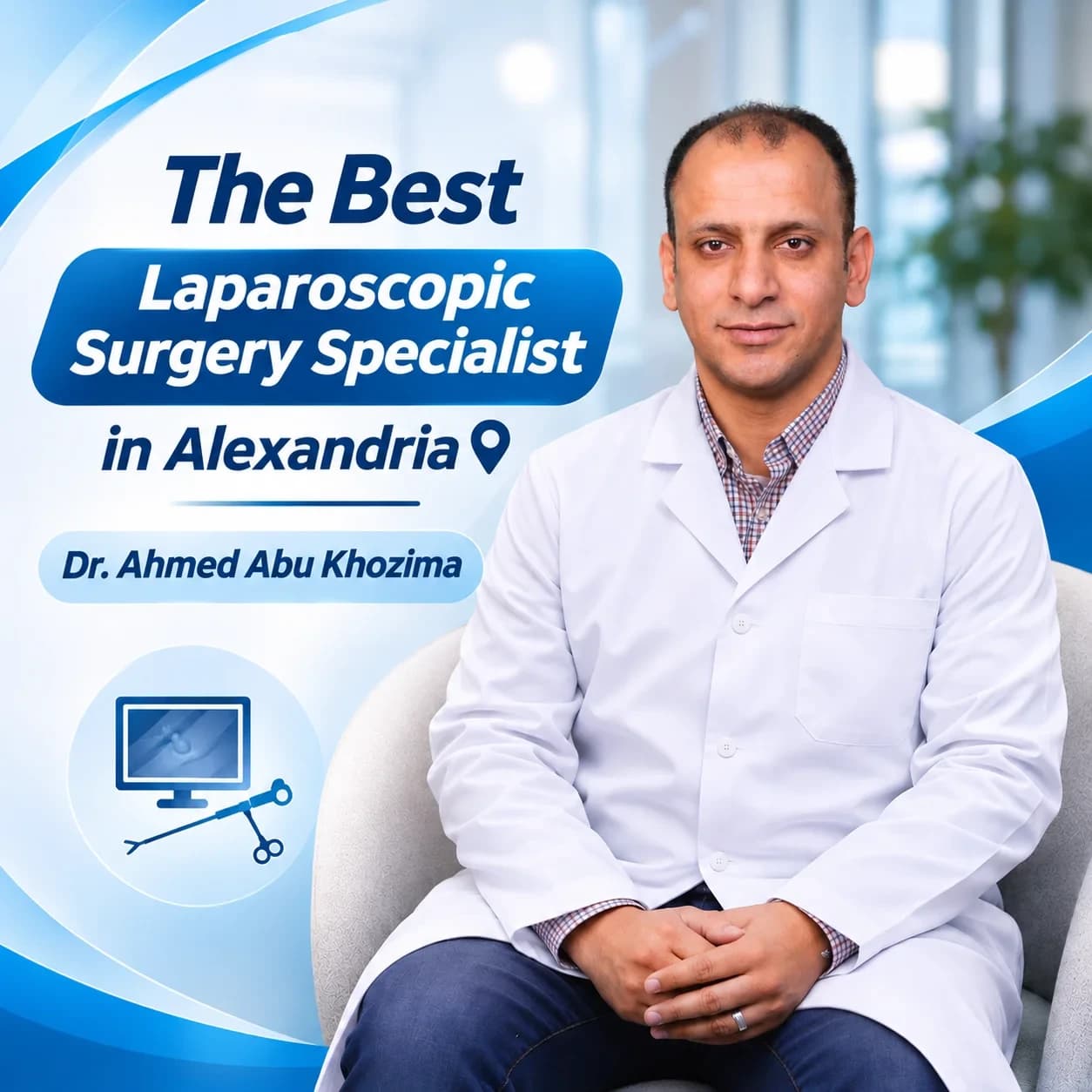

Choosing the best laparoscopic surgeon in Alexandria starts with accurate diagnosis and the surgeon's experience in the specific procedure required, not popularity alone. It involves selecting the appropriate technique, assessing the patient's health, and providing follow-up care throughout the recovery period.
Laparoscopic surgery is one of the modern surgical techniques that has helped advance many surgical procedures. It has become a suitable option for certain cases involving the gallbladder, hernias, and digestive system conditions. Therefore, it is important to understand the surgeon's qualifications and the types of procedures they perform, as well as the quality of medical care provided before and after surgery.
Looking for a laparoscopic surgeon in Alexandria? Book your consultation with Dr. Ahmed Abu Kheima in Smouha.
What Makes a Successful Laparoscopic Surgery Consultant?
Choosing a laparoscopic surgeon should not depend on popularity or patient reviews alone. Several medical criteria can help patients make an informed decision. These include the surgeon's academic qualifications, specialized training in general and laparoscopic surgery, and practical experience in the specific procedure required.
It is also important to consider the surgeon's ability to explain the diagnosis and available treatment options, clarify the benefits and risks of surgery, and discuss possible alternatives. Patients should also ensure that a qualified anesthesia team and a proper postoperative follow-up system are available, along with the necessary facilities to manage potential complications.
Why Do Patients Choose Laparoscopic Surgery?
Laparoscopic surgery is a surgical technique that involves inserting a small camera and surgical instruments through tiny incisions in the body, instead of making a large surgical incision as in many open procedures.
When suitable for the patient's condition, this technique can help reduce incision size and postoperative pain. It may also allow patients to recover and return to their usual activities sooner compared with open surgery in certain procedures.
Some of its most common applications include:
Laparoscopic gallbladder removal to treat certain cases of gallstones and their complications.
Repair of different types of hernias.
Treatment of certain cases of hiatal hernia.
Some stomach and digestive system surgeries.
Certain bariatric surgeries for severe obesity.
However, laparoscopic surgery is not necessarily the best option for every patient. The appropriate technique depends on the nature of the condition, medical history, overall health, and examination results.
Key Laparoscopic Procedures a Surgeon Should Have Experience In
Laparoscopic Gallbladder Removal
Laparoscopic cholecystectomy is used in cases that require gallbladder removal. Common reasons include symptomatic gallstones and certain inflammatory conditions or complications.
The procedure is performed using a camera and surgical instruments inserted through small incisions in the abdomen. The surgeon determines whether it is suitable after evaluating the patient's test results and overall health. It is also important to discuss the possibility of converting to open surgery if the circumstances require it, as patient safety remains the priority.
Laparoscopic Hernia Repair
A hernia occurs when internal tissue pushes through a weak area in the muscles or abdominal wall. Hernias vary according to their location, with common types including inguinal, umbilical, and incisional hernias.
Some types of hernias can be repaired laparoscopically. The procedure may involve using a surgical mesh to reinforce the weakened area, depending on the type and size of the hernia and the surgeon's assessment. Not all cases require the same approach, so the treatment method should be determined after a medical examination.
Laparoscopic Hiatal Hernia Surgery
A hiatal hernia occurs when part of the stomach moves upward through an opening in the diaphragm. It may be associated with symptoms of gastroesophageal reflux disease, such as heartburn and acid regurgitation.
Not every patient with a hiatal hernia requires surgery. The decision depends on symptom severity, examination results, and response to treatment. In cases where surgical intervention is necessary, laparoscopic surgery may be one of the available options.
How to Choose the Best Laparoscopic Surgeon
Before booking a consultation, consider asking the following questions to help evaluate the surgeon and the quality of medical care:
What academic qualifications and specialized training does the surgeon have?
Does the surgeon have experience performing the specific procedure I need?
What treatment options are available for my condition, and are there non-surgical alternatives?
What are the potential risks of the procedure, and how are they managed?
Who is responsible for anesthesia and postoperative monitoring?
What follow-up and recovery care will be provided?
It is also helpful to learn about the hospital or medical facility where the procedure will be performed and whether it has the appropriate medical equipment. The number of advertised procedures or patient reviews should not be the only factors influencing your decision. Instead, consider the surgeon's qualifications, experience with the specific procedure, and overall quality of care.
Dr. Ahmed Abu Kheima: A Laparoscopic Surgeon in Smouha, Alexandria
Dr. Ahmed Abu Kheima provides laparoscopic, digestive system, and bariatric surgery services in Alexandria. He is a Senior Consultant in General Surgery, Gastrointestinal Surgery, and Oncology Surgery. He holds a Doctorate in Laparoscopic Surgery and Bariatric Surgery, in addition to a Master's degree in Gastrointestinal and Laparoscopic Surgery.
He is a member of the International Federation for the Surgery of Obesity and Metabolic Disorders (IFSO), the Egyptian Society for Bariatric Surgery (ESBS), and the Egyptian Society of Laparoscopic Surgery (ESLS), with more than 15 years of professional experience.
The services provided by Dr. Ahmed Abu Kheima, a laparoscopic surgeon in Alexandria, include a range of specialized surgical procedures, most notably:
Laparoscopic gallbladder removal.
Repair of various types of hernias.
Gastrointestinal, colon, and cancer surgeries.
Bariatric surgeries, such as sleeve gastrectomy, gastric bypass, and the SASI procedure.
The appropriate procedure varies from one patient to another. Therefore, the need for surgery and the choice of technique cannot be determined based on general information alone. A comprehensive medical assessment and discussion of the available options with the surgeon are essential.
To contact Dr. Ahmed Abu Kheima's clinic and book a consultation:
The Importance of Preoperative and Postoperative Follow-Up
Medical care does not end once the surgery is performed. Important stages begin before the procedure, including reviewing the patient's medical history, current medications, allergies, and chronic conditions, as well as conducting the tests recommended by the medical team.
After surgery, recovery instructions vary depending on the procedure and the patient's condition. They may include wound care, regulating physical activity, following an appropriate diet, and taking medications according to the doctor's instructions.
It is essential to contact the medical team if unusual symptoms develop, such as fever, increasing pain, or redness and discharge from the wound. Difficulty breathing or chest pain requires immediate medical attention.
Consultation Steps and Cost
What Happens During the Consultation?
The consultation begins with reviewing the patient's medical history, symptoms, and medications, followed by a physical examination and any necessary investigations, such as ultrasound, laboratory tests, or endoscopy, depending on the condition. The available treatment options are then discussed.
How Much Does Laparoscopic Surgery Cost?
The cost varies depending on the type of procedure, hospital, length of stay, and required tests. The final cost is determined after examining and evaluating the patient's condition. Contact the clinic for further details.
Book Your Consultation with Dr. Ahmed Abu Kheima in Alexandria
If you are looking for a laparoscopic surgeon in Alexandria, you can contact Dr. Ahmed Abu Kheima's clinic to book a consultation, discuss your condition, and learn about the appropriate medical options.
The clinic is located in Smouha, at 29 Fawzy Moaz Street, next to Etisalat, Safwa Businessmen Towers, Entrance 2, Clinic 203.
For appointments and inquiries:
Phone: 01226222297
WhatsApp: 01006719949
Landline: 034266874 – 034266875
Start with an accurate diagnosis, and make sure to ask about the procedure, its risks, available alternatives, and follow-up plan before making your treatment decision.
Frequently Asked Questions About Laparoscopic Surgery in Alexandria
Who Is the Best Laparoscopic Surgeon in Alexandria?
Choosing the right surgeon depends on their academic qualifications, experience with the required procedure, ability to evaluate the patient's condition and explain treatment options, as well as the medical team's competence and quality of follow-up care. Dr. Ahmed Abu Kheima provides laparoscopic and gastrointestinal surgery services in Alexandria.
What Is the Difference Between Laparoscopic and Open Surgery?
Laparoscopic surgery uses small incisions to insert a camera and surgical instruments, whereas open surgery usually requires a larger incision to access the targeted area. Laparoscopy may offer faster recovery and less pain in certain procedures, but the appropriate approach depends on the patient's medical condition.
Is Laparoscopic Surgery Safe?
Laparoscopic surgery is widely used, but like any surgical intervention, it carries potential risks, including bleeding, infection, and injury to organs or blood vessels. The risks depend on the type of procedure, the patient's health, and the surgical team's experience.
Can the Gallbladder Be Removed Laparoscopically?
Yes. Laparoscopic gallbladder removal is a common surgical procedure used to treat conditions that require gallbladder removal, particularly certain cases of gallstones and inflammation. The surgeon determines whether the technique is suitable after reviewing the test results and evaluating the patient.
How Much Does Laparoscopic Surgery Cost in Alexandria?
The cost varies depending on the type of procedure, hospital, length of stay, and required tests. The final cost is determined after examining and evaluating the patient's condition. Contact the clinic for further details.
Where Is Dr. Ahmed Abu Kheima's Clinic Located?
The clinic is located in Smouha, Alexandria, at 29 Fawzy Moaz Street, next to Etisalat, Safwa Businessmen Towers, Entrance 2, Clinic 203. You can book an appointment via WhatsApp at 01006719949 or by calling 01226222297.
When Can Patients Return to Their Normal Activities After Laparoscopic Surgery?
Recovery time varies depending on the type of procedure, the patient's health, and the nature of their daily activities. Some patients may return to their usual activities within a short period, while other procedures require a longer recovery time. The surgeon determines when patients can resume work, driving, and physical activities based on their recovery progress.