
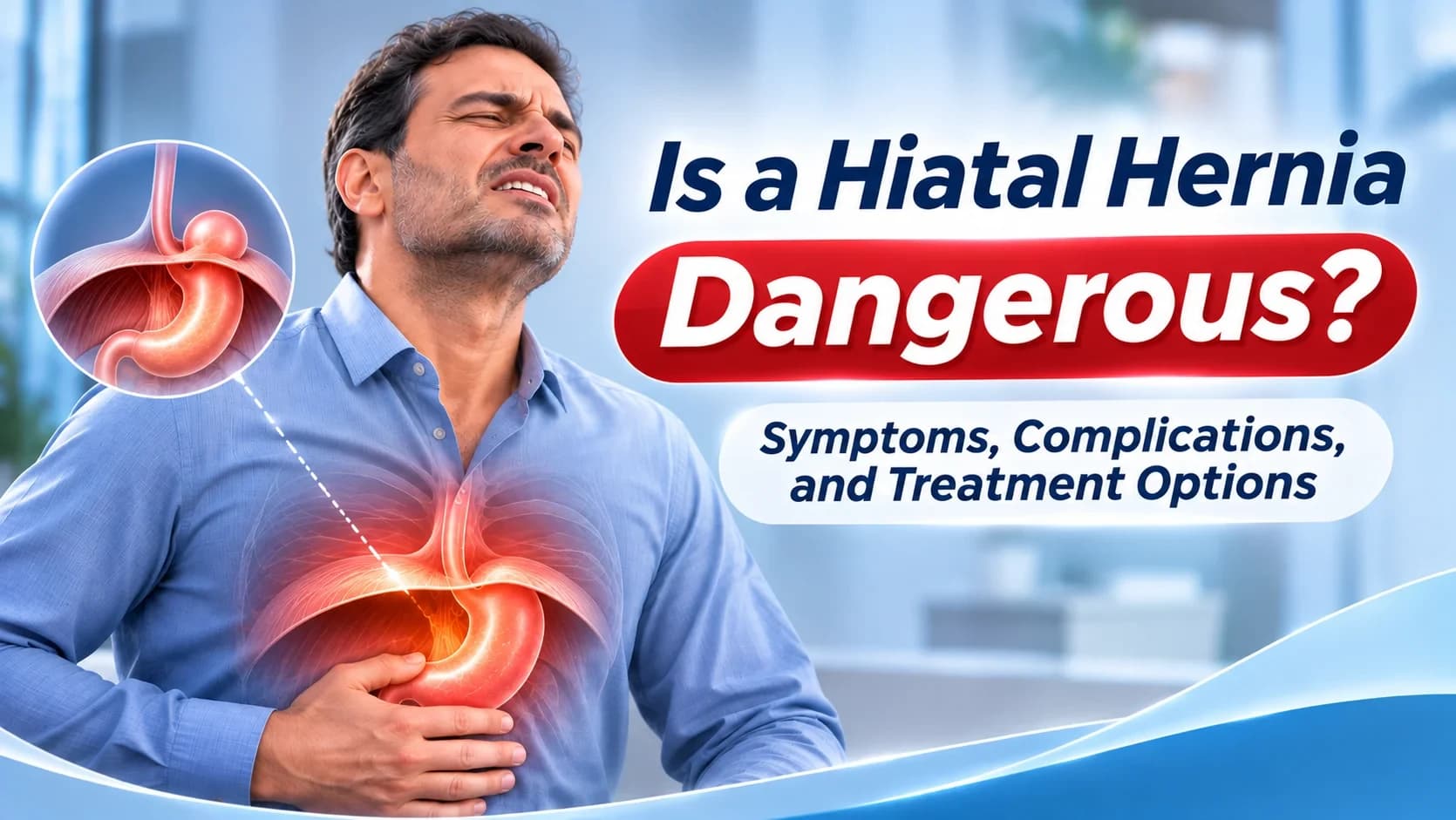
A hiatal hernia is a digestive condition that occurs when the upper part of the stomach pushes through an opening in the diaphragm muscle into the chest cavity. Some people discover they have one by chance without experiencing any noticeable symptoms, while others may suffer from heartburn, acid reflux, chest pain, and difficulty swallowing.
This raises an important question: Is a hiatal hernia dangerous? Can it lead to complications that threaten a patient's health? The answer depends on the type and size of the hernia, the associated symptoms, and how much it affects the function of the stomach and esophagus.
Medical Review: This article has been reviewed by Dr. Ahmed Abou Kheima, Consultant in General Surgery, Gastrointestinal Surgery, and Surgical Oncology.
Is a Hiatal Hernia Dangerous in All Cases?
A hiatal hernia is not dangerous in every case. Many people with this condition live normally without experiencing symptoms or requiring surgery. The level of risk depends on the size and type of hernia and how it affects stomach movement and esophageal function.
In mild cases, the doctor may recommend regular monitoring and dietary changes. However, cases involving severe acid reflux or complications may require specialized evaluation and treatment.
It is important to understand that having a hiatal hernia does not necessarily mean that a serious health problem will develop in the future. However, ignoring persistent symptoms or warning signs may delay the detection of complications. Therefore, the doctor determines the level of risk after an appropriate examination and diagnosis.
When Does a Hiatal Hernia Become Dangerous?
A hiatal hernia becomes more concerning when it is large, is of the paraesophageal type, or causes the stomach to become trapped or affects its blood supply. Severe and persistent symptoms also require medical attention, especially when they interfere with the patient's ability to eat or swallow normally.
Warning signs to look out for include:
Severe or sudden pain in the chest or upper abdomen.
Repeated vomiting or an inability to keep food down.
Increasing difficulty swallowing.
Vomiting blood or passing black stools.
Shortness of breath accompanied by severe digestive symptoms.
These signs may indicate complications that require urgent medical evaluation. They should not automatically be attributed to the hernia alone, as severe chest pain also requires ruling out cardiac causes.
What Are the Complications of a Hiatal Hernia?
A hiatal hernia, particularly a large one or one associated with chronic acid reflux, may lead to several complications. Their severity varies from one patient to another. Not everyone with a hiatal hernia develops these problems, but they require attention and medical follow-up to prevent them from progressing.
Potential complications include:
Esophagitis: Inflammation of the esophageal lining caused by repeated exposure to stomach acid.
Esophageal ulcers: These may develop in some cases as a result of chronic inflammation.
Bleeding: This can occur due to tissue erosion or ulceration and may lead to anemia.
Esophageal stricture: Repeated inflammation and scarring may cause the esophagus to narrow, making swallowing difficult.
Stomach entrapment or strangulation: Rare but serious complications that may affect blood flow to the tissues.
The likelihood of these complications depends on the type of hernia and the patient's overall health.
Can a Hiatal Hernia Cause Death?
In most cases, a hiatal hernia is not life-threatening, particularly when it is small and does not cause stomach entrapment or impaired blood flow. However, rare but serious complications may occur, such as strangulation of the herniated part of the stomach, loss of its blood supply, or stomach obstruction and twisting.
The danger is that these complications may lead to tissue damage if the patient does not receive appropriate medical treatment in time. Therefore, sudden severe pain, repeated vomiting, or an inability to swallow should never be ignored.
Most importantly, a hiatal hernia diagnosis does not mean that the patient's life is at risk. Identifying the type of hernia, monitoring its progression, and addressing symptoms early can help reduce the likelihood of serious complications.
What Are the Symptoms of a Severe Hiatal Hernia?
A small hiatal hernia may not cause any symptoms. However, as it grows or affects the function of the stomach and esophagus, more noticeable symptoms may develop. These can overlap with symptoms of gastroesophageal reflux disease (GERD).
Common symptoms include:
Frequent heartburn, especially after eating.
Regurgitation of stomach acid or food into the throat and mouth.
Chest or upper abdominal pain.
Difficulty or pain when swallowing.
Feeling full quickly after eating small amounts of food.
Nausea and vomiting in some cases.
Shortness of breath, particularly with a large hernia.
Persistent symptoms or increasing severity should be taken seriously. They require evaluation by a specialist to identify the cause and determine the appropriate treatment.
How Is a Hiatal Hernia Diagnosed?
Diagnosing a hiatal hernia involves evaluating the patient's symptoms and medical history, followed by selecting tests that help determine the type and size of the hernia and its effects on the digestive system.
Diagnosis is not based on symptoms alone, as heartburn and chest pain may be associated with other health conditions.
The doctor may recommend the following tests:
Upper Gastrointestinal Endoscopy: To examine the esophagus and stomach and identify inflammation or ulcers.
Barium Swallow X-ray: To assess swallowing and visualize the position of the stomach and the hernia.
Esophageal Manometry: To evaluate the movement and function of the esophageal muscles when necessary.
The doctor may also request a CT scan if complications such as stomach twisting are suspected. The appropriate test depends on the patient's condition and the purpose of the evaluation.
Can You Live with a Hiatal Hernia?
Yes. Many patients can live with a hiatal hernia without major problems, particularly when it is small and does not cause bothersome symptoms. In these cases, surgery may not be necessary. Instead, the patient may only need medical monitoring and certain lifestyle changes to reduce acid reflux and heartburn.
The following recommendations may help manage symptoms:
Eat smaller meals instead of large ones.
Avoid lying down for two to three hours after eating.
Reduce foods that trigger heartburn based on your individual response to them.
Maintain a healthy weight.
Elevate the upper part of the bed if you experience nighttime reflux.
Avoid smoking.
If necessary, the doctor may prescribe medication to reduce stomach acid production and monitor the patient's response to treatment.
When Does a Hiatal Hernia Require Surgery?
Not all hiatal hernias require surgery. The decision depends on the type and size of the hernia, the symptoms, and the potential complications.
Surgery may be recommended when symptoms are severe or persistent despite medication and lifestyle changes, or when a paraesophageal hernia carries a risk of complications such as entrapment or twisting of the stomach.
Hiatal hernia repair is often performed using laparoscopic surgery. The surgeon moves the stomach back into its normal position and repairs the opening in the diaphragm as required by the patient's condition. An additional procedure may also be performed to reduce acid reflux.
Determining whether surgery is appropriate requires a specialist evaluation, including the necessary tests and an assessment of the patient's overall health. The benefits, risks, and expected outcomes should be discussed before making a decision.
Book Your Consultation with Dr. Ahmed Abou Kheima for Hiatal Hernia Evaluation
If you experience frequent heartburn, acid reflux, chest pain, or difficulty swallowing, it is important not to ignore these symptoms and to seek a specialized medical evaluation.
An accurate diagnosis helps determine the size and type of hiatal hernia and whether the condition requires medication or surgical intervention.
Dr. Ahmed Abou Kheima provides diagnostic and treatment services for hiatal hernia using gastrointestinal and laparoscopic surgical techniques, with a treatment plan tailored to each patient's condition.
Book your consultation today at Dr. Ahmed Abou Kheima's clinic in Smouha, Alexandria, to assess your condition and learn about the most appropriate treatment options.
For appointments and inquiries: 01226222297
Frequently Asked Questions About Hiatal Hernia
Is a Hiatal Hernia a Chronic Condition?
A hiatal hernia may persist for a long time, but this does not necessarily mean that it causes continuous symptoms or requires surgery. Management depends on the type and size of the hernia and how much it affects the digestive system.
Can a Hiatal Hernia Cause Shortness of Breath?
Yes. A large hiatal hernia may cause shortness of breath when the stomach pushes into the chest and puts pressure on the lungs. Acid reflux may also sometimes be associated with respiratory symptoms. However, shortness of breath should be medically evaluated to rule out other possible causes.
Can a Hiatal Hernia Cause Heart Pain?
A hiatal hernia may cause chest pain or a burning sensation due to stomach acid reflux. This discomfort can resemble some symptoms of heart disease. Therefore, chest pain should not be assumed to be caused by a hiatal hernia before cardiac causes have been ruled out, particularly when the pain is sudden or severe.
Can a Hiatal Hernia Be Treated Without Surgery?
Yes. The symptoms of many cases can be managed with medications that reduce stomach acid production, along with dietary and lifestyle changes. However, medication does not move the stomach back into its normal position or close the hernia. Some cases may still require surgical intervention.
Does a Hiatal Hernia Get Worse Over Time?
Not necessarily. The hernia does not increase in size in every patient and may remain stable for long periods. However, some cases may progress or develop new symptoms. Regular medical follow-up helps assess the condition and identify any changes that may require treatment.