
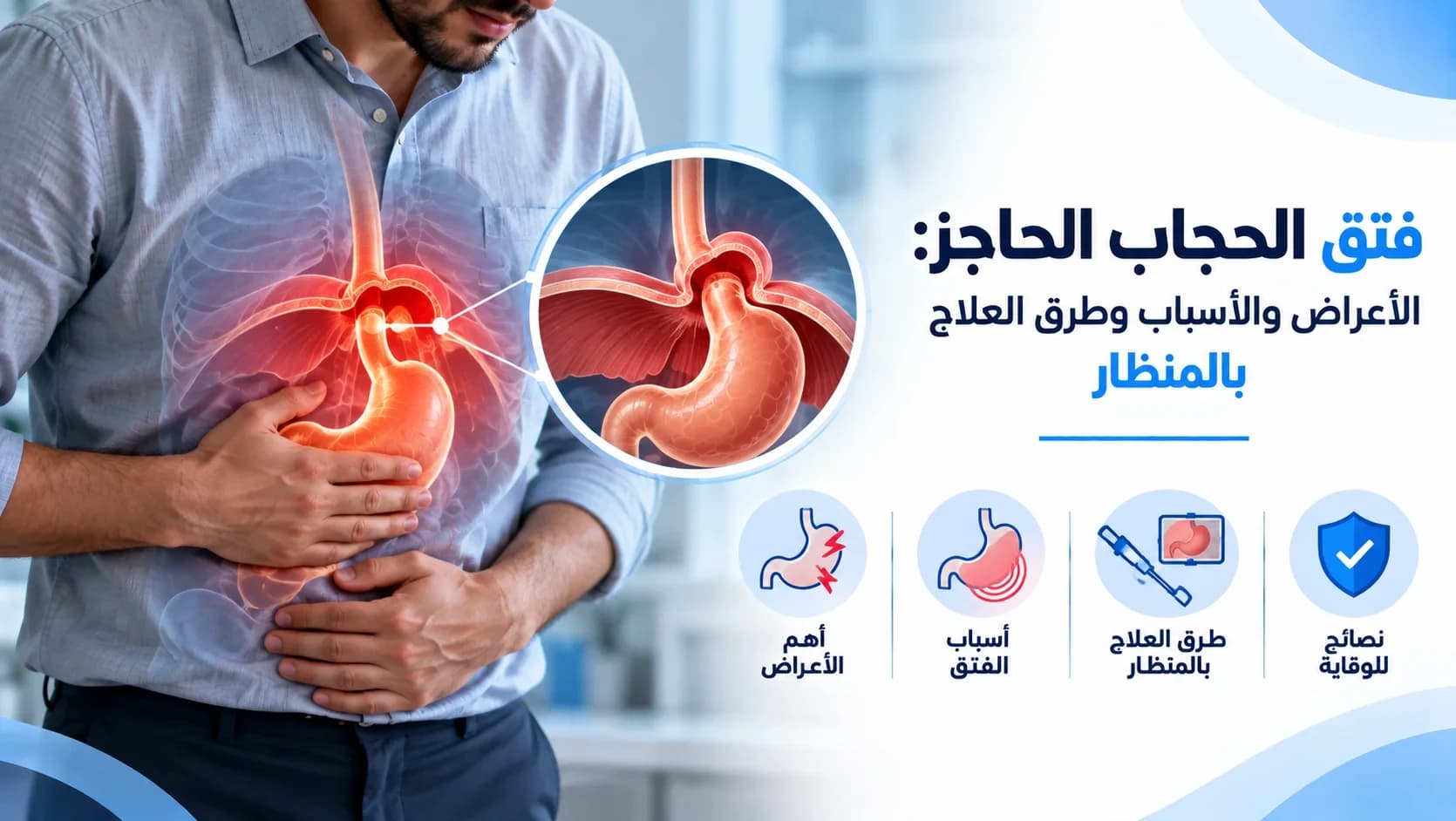
A hiatal hernia is a condition that may cause recurrent heartburn, food regurgitation, and difficulty swallowing, although some people experience no symptoms at all. The appropriate approach depends on the size of the hernia and its effect on stomach and esophageal function, so not every patient needs surgery. In this article, we explore the causes and symptoms of a hiatal hernia, how it is diagnosed, when medication alone may be sufficient, and which cases may require laparoscopic hiatal hernia repair.
Medical Review Notice: This article has been medically reviewed by Dr. Ahmed Abu Khazima, Consultant in General Surgery, Gastrointestinal Surgery, and Surgical Oncology, after verifying the medical information it contains.
What Is a Hiatal Hernia?
A hiatal hernia is a condition in which the upper part of the stomach moves through an opening in the diaphragm into the chest cavity. The diaphragm is a muscle that separates the chest from the abdomen, and the esophagus passes through a small opening in it before connecting to the stomach. When the tissues surrounding this opening weaken or the opening widens, part of the stomach may move upward.
A small hiatal hernia does not cause problems for many people and may be discovered incidentally during tests performed for another reason. A larger hernia, however, may be associated with stomach acid flowing back into the esophagus or difficulty swallowing. The appropriate treatment depends on the symptoms, the type and size of the hernia, and the test results, rather than on the presence of a hernia alone.
What Are the Causes of a Hiatal Hernia?
There is no single confirmed cause for every case, but weakness in the tissues surrounding the diaphragmatic opening and increased pressure inside the abdomen may contribute to the development of a hiatal hernia. It becomes more common with age, and certain risk factors are associated with repeated increases in pressure around the stomach.
The main factors that may increase the likelihood of developing a hiatal hernia include:
Advancing age and weakening of the tissues and muscles.
Excess weight and obesity.
Chronic coughing or recurrent vomiting.
Straining during bowel movements due to constipation.
Repeatedly lifting heavy weights.
Anatomical variations in the opening of the diaphragm.
Having one of these risk factors does not necessarily mean that a person has a hiatal hernia. Identifying the cause and assessing persistent symptoms require medical evaluation.
What Are the Symptoms of a Hiatal Hernia?
The symptoms of a hiatal hernia vary depending on its size and how it affects the movement of food and the reflux of stomach acid. Some people experience no symptoms, while others develop problems similar to those of gastroesophageal reflux, particularly after eating large meals or lying down.
Possible symptoms include:
Heartburn and a burning sensation in the chest or upper abdomen.
Regurgitation of food or fluids into the mouth.
Belching, bloating, and a feeling of fullness.
Difficulty swallowing or a sensation that food is getting stuck.
Pain in the upper abdomen or chest.
Feeling full after eating a small amount of food.
These symptoms alone do not confirm the presence of a hiatal hernia, as they may result from other digestive conditions. Seek urgent medical attention if you experience severe or sudden chest pain, especially if it is accompanied by shortness of breath, sweating, or dizziness.
How Is a Hiatal Hernia Diagnosed?
Diagnosing a hiatal hernia involves assessing symptoms, reviewing the patient's medical history, and performing an examination before selecting the appropriate tests. A hernia may be discovered while investigating the causes of chronic heartburn, food regurgitation, or difficulty swallowing. The required tests vary according to the patient's condition.
Upper Gastrointestinal Endoscopy
An upper gastrointestinal endoscopy allows the doctor to examine the esophagus and stomach, identify inflammation or complications associated with reflux, and detect signs of a hiatal hernia.
Upper Gastrointestinal Imaging and Esophageal Manometry
The doctor may request an upper gastrointestinal series using contrast material to visualize the position of the stomach and esophagus. Esophageal manometry may also be performed to assess the movement and function of the esophageal muscles. The need for each test depends on the symptoms and treatment plan, particularly when surgery is being considered.
What Is the Non-Surgical Treatment for a Hiatal Hernia?
Many cases can be managed without surgery, particularly when the hernia is small or the symptoms are mild. Medication aims to reduce stomach acidity and control reflux, while lifestyle changes can help relieve symptoms. However, these measures do not necessarily eliminate the hernia or return the stomach to its normal position.
The doctor may recommend measures such as:
Eating smaller meals instead of large portions.
Avoiding lying down for two to three hours after eating.
Losing weight if overweight.
Reducing foods and drinks that trigger heartburn.
Elevating the upper body during sleep when experiencing nighttime symptoms.
Using appropriate medications to reduce stomach acid according to the doctor's instructions.
If symptoms persist despite treatment, or if increasing difficulty swallowing or other complications develop, the condition should be reassessed to determine whether additional treatment options are needed.
When Does a Hiatal Hernia Require Surgery?
Not every patient with a hiatal hernia needs surgery. The decision depends on the severity of symptoms, the type and size of the hernia, and whether complications are present. Surgery may be recommended when reflux symptoms do not improve with appropriate treatment, or when the hernia is large or associated with problems that require repair.
The goal of surgery is to return the stomach to its normal position in the abdomen and repair the opening in the diaphragm. An additional procedure may be performed to reduce the reflux of stomach contents into the esophagus. Before making a decision, the surgeon reviews the test results and the patient's overall health, then discusses the potential benefits, risks, and available alternatives.
How Is Laparoscopic Hiatal Hernia Surgery Performed?
Laparoscopic hiatal hernia surgery is performed through small incisions in the abdomen. A camera and specialized surgical instruments are inserted through these incisions. The surgeon uses them to return the stomach to its normal position and repair the opening in the diaphragm. Depending on the patient's condition, an additional procedure may be performed to strengthen the barrier between the stomach and esophagus.
Compared with open surgery, laparoscopy involves smaller incisions and may help reduce pain and speed up recovery in suitable patients. However, the duration of surgery, hospital stay, and recovery period vary from person to person. The doctor provides instructions regarding diet, movement, and returning to daily activities based on the type of procedure and the patient's recovery.
Is a Hiatal Hernia Dangerous?
A small hiatal hernia generally does not cause serious complications, but cases associated with chronic reflux may lead to inflammation or narrowing of the esophagus over time. In less common cases, part of the stomach may become trapped or its blood supply may be compromised. These situations require urgent medical assessment.
Seek urgent medical care if you experience severe and sudden pain in the chest or upper abdomen, repeated vomiting, severe difficulty swallowing, vomiting blood, or black stools. Do not assume that these symptoms are caused by a hiatal hernia alone, as some may indicate other medical emergencies.
Book a Consultation to Have Your Hiatal Hernia Evaluated
If you experience recurrent heartburn, food regurgitation, or difficulty swallowing, a medical evaluation can help identify the cause and determine the most appropriate treatment. Dr. Ahmed Abu Khazima provides gastrointestinal surgery and endoscopy services in Alexandria, assessing each patient's condition and discussing suitable treatment options based on examination findings.
To book an appointment, contact the clinic using the following details:
Phone: 01226222297
WhatsApp: 01006719949
Address: Smouha, 29 Fawzy Moaz Street, next to Etisalat, Safwa Business Center, Entrance 2, Clinic 203.
Frequently Asked Questions About Hiatal Hernia
Can a Hiatal Hernia Be Treated Without Surgery?
Yes, symptoms can be managed in many cases with medication and lifestyle changes. However, medication relieves heartburn and reflux but does not necessarily repair the hernia itself. The need for surgery is determined by the doctor based on the patient's condition.
Does a Hiatal Hernia Cause Acid Reflux?
A hiatal hernia may contribute to acid reflux because changes in the position of the connection between the stomach and esophagus can weaken the barrier that prevents stomach acid from flowing backward. However, not everyone with a hiatal hernia experiences reflux.
Can a Hiatal Hernia Cause Shortness of Breath?
A large hiatal hernia may sometimes be associated with shortness of breath, but this symptom has many possible causes, including heart and lung conditions. New or severe shortness of breath requires urgent medical evaluation and should not be attributed to a hernia without an examination.
How Long Does Recovery Take After Laparoscopic Hiatal Hernia Surgery?
Recovery time varies depending on the type of surgery and the patient's overall health. Patients may need to gradually adjust the consistency of their food and temporarily limit strenuous activity and heavy lifting, following the surgeon's instructions and attending scheduled follow-up appointments.
Can a Hiatal Hernia Return After Surgery?
Yes, a hiatal hernia can recur in some patients after surgery, and some symptoms may return as well. Medical follow-up and adherence to postoperative instructions help identify and address any problems early.